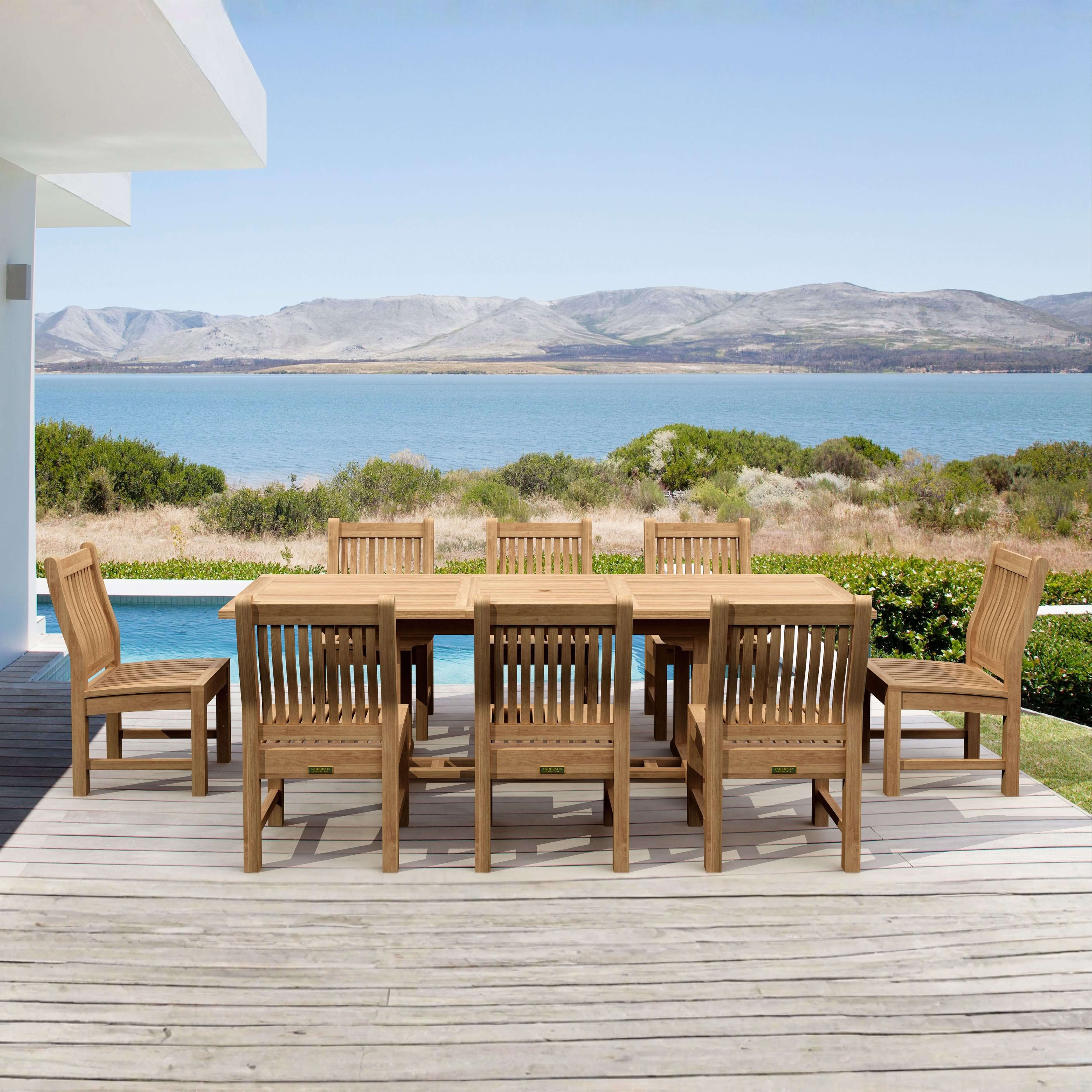
How to Clean & Care for Teak Furniture (Full Guide)

How to Clean & Care for Teak Furniture (Full Guide)

If you’ve just invested in a piece of Grade-A teak furniture or you’re standing in front of a weathered teak bench wondering if you did something wrong  this guide is for you. One of the most common questions we hear isn’t “which collection should I buy,” it’s “how do I actually take care of this thing once it’s on my patio?”

The good news: teak is one of the lowest-maintenance materials in outdoor furniture. But “low-maintenance” doesn’t mean “no-maintenance,” and a few wrong moves (like reaching for the wrong cleaner, or over-oiling) can actually work against the wood’s natural durability. Here’s exactly what to do.

First, Understand What’s Actually Happening to Your Teak

Untreated, unfinished teak the kind used across Anderson Teak’s Grade-A collections naturally changes color over time. Fresh teak starts out a warm honey-brown. Left outdoors and exposed to UV light and rain, it develops a silver-gray patina within 6 months to a year.

This isn’t damage. It’s teak’s natural oils rising to the surface and oxidizing, and it’s the same process that has let teak furniture last on ships’ decks and garden estates for generations. The patina layer actually helps protect the wood underneath. Whether you love the silvery look or want to preserve that original honey tone is entirely a matter of taste and it determines which care routine you follow below.

Routine Cleaning: What to Do Every Few Months

Regardless of which look you’re going for, basic cleaning keeps mildew, dirt, and pollen from building up in the wood grain.

  1. Dust or rinse first. A garden hose or a soft brush removes loose dirt before you introduce any cleaning solution.
  2. Use mild soap and warm water. A soft-bristle brush with a mixture of dish soap and water is enough for most cleaning. Scrub gently with the direction of the grain.
  3. Avoid harsh chemicals. Skip bleach, ammonia-based cleaners, or pressure washers on a high setting all three can strip the wood’s natural oils and roughen the surface prematurely.
  4. For stubborn gray spots or mildew, a specialty teak cleaner (widely available at outdoor furniture retailers) with a soft-bristle brush will lift stains without damaging the fibers. Always rinse thoroughly afterward.
  5. Let it air dry in the sun before using the furniture again or adding cushions back.

That’s it for most owners a rinse-and-scrub every couple of months is genuinely all Grade-A teak needs to stay structurally sound for decades.

If You Want to Keep the Golden-Brown Look

Some owners prefer teak’s original color rather than letting it silver naturally. If that’s you:

  • Apply teak oil or teak sealer 2–4 times per year, more often in intense sun or coastal climates.
  • Clean and fully dry the piece first oil applied over dirt or moisture traps both underneath.
  • Apply a thin, even coat with a cloth or brush, wipe off excess after 10–15 minutes, and let it cure for 24 hours before use.
  • Know that this is an ongoing commitment: once you start oiling, you’ll need to keep it up, or the wood will patina unevenly in blotches rather than uniformly.

If You’re Letting It Go Silver (Most Popular Choice)

Most teak owners including the majority of our customers simply let the wood weather naturally. If that’s your plan:

  • Do nothing beyond the routine cleaning above.
  • Skip oils and sealers entirely; they interfere with even patina development.
  • Expect the silvering process to be uneven at first (this is normal) and settle into a uniform silver-gray within the first year.

Seasonal Care Tips

  • Cushions and fabric: Bring Sunbrella cushions indoors or into a storage box during long stretches of rain, and store them for winter in colder climates. Fabric needs more active care than the teak frame itself.
  • Off-season storage: Teak can be left outdoors year-round safely, but a breathable furniture cover reduces the buildup of leaves, pollen, and standing water in joints during winter or monsoon season.
  • Hardware check: Once a year, check screws and joints (especially on extension tables and folding pieces) and tighten as needed — wood naturally expands and contracts slightly with humidity.
  • Avoid full plastic covers in humid climates. Non-breathable covers can trap moisture against the wood and encourage mildew. A breathable, water-resistant cover is the better choice.

Common Mistakes to Avoid

  • Over-oiling “unfinished” teak hoping it’ll stay glossy forever it won’t, and heavy buildup can go sticky or blotchy.
  • Pressure washing on high PSI, which erodes the wood grain and shortens the furniture’s lifespan.
  • Using indoor wood polish or furniture wax, which isn’t formulated for outdoor exposure and can trap moisture.
  • Ignoring cushions, which usually wear out long before the teak frame does if left out in the elements.

The Bottom Line

Teak’s reputation as “the ultimate low-maintenance luxury” is well earned but it’s not zero-maintenance. A simple soap-and-water routine a few times a year, plus a decision up front about whether you want that golden finish or the silver patina look, is genuinely all it takes to keep Grade-A teak furniture performing beautifully for 20-plus years.

Ready to bring this kind of low-maintenance luxury to your own outdoor space? Explore our full range of Grade-A teak collections from the classic Anderson Collection to the modern lines of the Chapman Collection and Montserrat Collection and find the pieces that will age beautifully on your patio for decades to come.
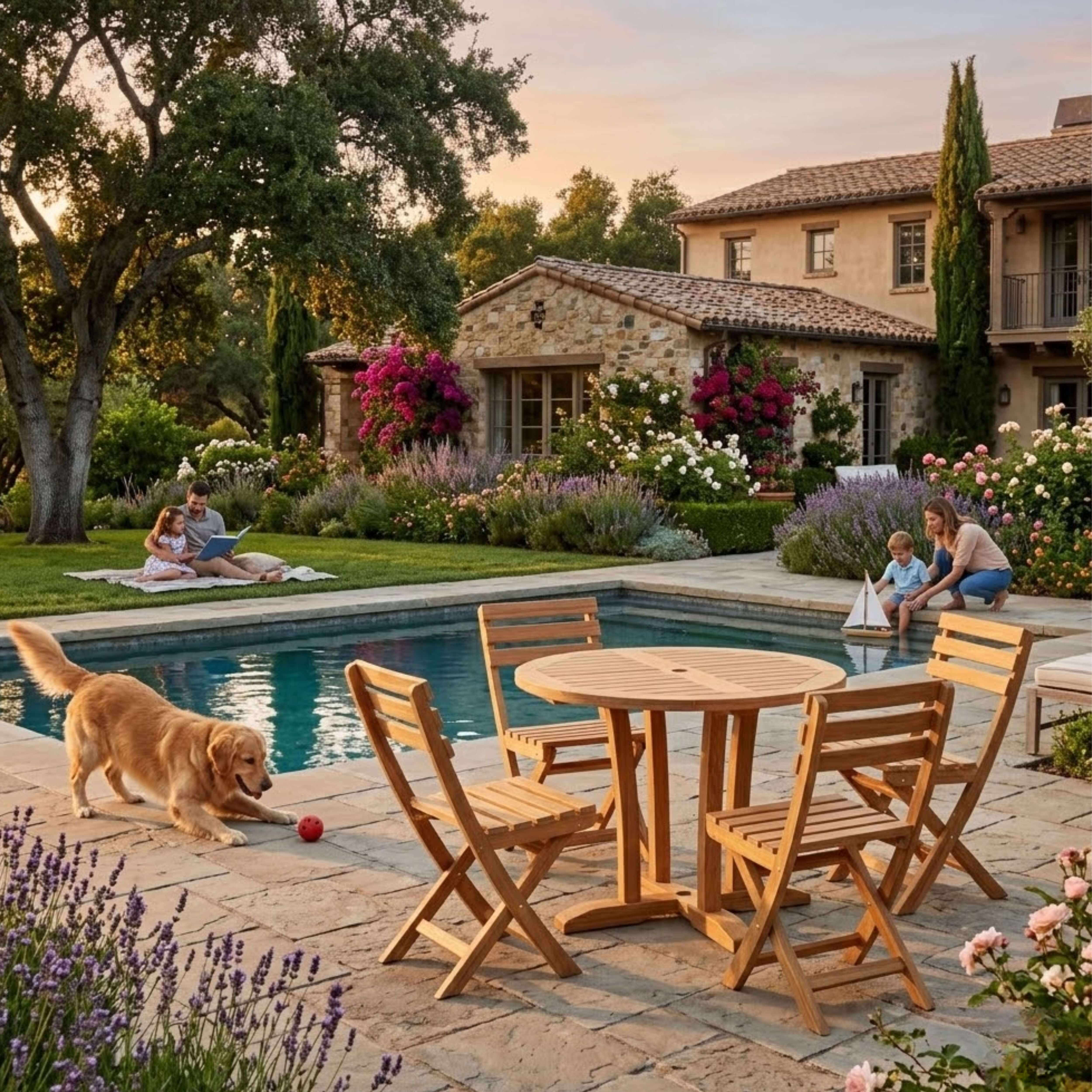
How Teak Furniture Performs in Different Climates: A Practical Guide

How Teak Furniture Performs in Different Climates: A Practical Guide

One of the most common questions buyers ask before investing in teak furniture is: “Will it hold up in my climate?” It’s a fair question outdoor furniture in a Mediterranean garden faces entirely different conditions than furniture on a beachfront deck in Florida, a rainy terrace in the Pacific Northwest, or a rooftop in the Arizona desert.

The short answer is that Grade-A teak is one of the very few furniture materials that performs well across virtually all climates. But how it ages, what maintenance it needs, and what to watch for varies depending on your environment. Here’s a climate-by-climate breakdown.

Tropical and Humid Climates

(Southeast Asia, Caribbean, Florida, Gulf Coast, Hawaii)

What teak faces: High heat, intense UV, heavy rainfall, high year-round humidity, salt air in coastal areas, and the kind of perpetual moisture that destroys most other wood species within a few years.

How teak handles it: This is actually teak’s native environment. Tectona grandis evolved in the tropical forests of Southeast Asia, and its natural oil content and density were developed precisely to handle these conditions. Teak handles tropical heat, monsoon rain, and coastal salt air better than any alternative material. It’s the reason teak furniture dominates the outdoor furniture of high-end tropical resorts worldwide.

What to watch for: In very humid, shaded environments, the surface can develop mildew or algae especially in gaps between slats. This is surface-level and doesn’t damage the wood; it cleans off with a teak cleaner. If furniture is in a low-airflow area (under a dense canopy, against a wall), increase cleaning frequency to twice a year.

Maintenance: Low. An annual clean with mild soap and water, and optional teak oil application. Patina will develop faster in tropical climates than in dry ones, moving from golden-brown to silver-gray within 1–2 seasons if left untreated.

Coastal and Saltwater Environments

(Ocean-facing decks, beachfront properties, marina settings)

What teak faces: Salt air, salt spray, high UV exposure, wind-driven moisture, and often high humidity.

How teak handles it: Teak has been used in marine applications yacht decks, ship fittings for centuries because it handles saltwater exposure better than almost any other wood. The natural silica and oils resist salt penetration and the associated corrosion and swelling. In coastal settings, teak out-performs aluminum (which pits under salt air exposure despite coatings), powder-coated steel (which rusts where the coating is compromised), and synthetic resins (which fade and embrittle from UV).

What to watch for: Hardware is the vulnerable point, not the wood. Even marine-grade stainless steel can develop surface rust spots (tea staining) in extreme saltwater environments. Inspect and wipe down hardware annually, and apply a stainless steel protector if spots appear.

Maintenance: Monthly rinse with fresh water to remove salt accumulation. Annual cleaning and optional oiling. If furniture is very close to the ocean (direct spray zone), rinse more frequently.

Hot and Dry Climates

(Desert Southwest USA, Middle East, Mediterranean summers, inland Australia)

What teak faces: Extreme heat (sometimes exceeding 50°C / 120°F at the surface), intense direct UV, very low humidity, minimal rain, and large daily temperature swings.

How teak handles it: Better than most materials, but dry climates present the most challenging conditions for any wood. In very dry environments, wood loses moisture and can crack or split even in teak, though Grade-A heartwood’s density and natural oils make it significantly more resistant than other species.

What to watch for: Surface checking (small surface cracks following the grain) can appear in extreme dry heat, especially on thinner components. This is cosmetic, not structural, and doesn’t compromise the furniture. Apply teak oil or sealer more frequently in dry climates (every 6–12 months vs. annually) to help the wood retain moisture.

Maintenance: The most maintenance-intensive climate for teak. Oil or seal every 6–12 months. Clean before oiling. When furniture is not in use during peak heat, a breathable cover can reduce UV stress.

Temperate Climates with Wet Winters

(UK, Pacific Northwest, Northern Europe, New Zealand)

What teak faces: Moderate temperatures, high annual rainfall, damp winters, relatively lower UV compared to tropical or Mediterranean climates.

How teak handles it: Very well. Teak’s resistance to water absorption means the wet-dry cycles of temperate climates don’t cause swelling, warping, or cracking. The low UV environment means the golden-brown color holds slightly longer before transitioning to gray.

What to watch for: In consistently damp, low-sun environments, mildew can form on the surface—particularly in winter when furniture sits unused for extended periods. This is easily addressed with a teak cleaner in spring before the season begins. Consider breathable covers for the wetter winter months.

Maintenance: Low to moderate. Spring clean before the outdoor season, fall clean before winter. Optional oiling once a year if you prefer to maintain the warm color.

Cold Climates with Freezing Winters

(Northern USA, Canada, Scandinavia, Alpine regions)

What teak faces: Sub-zero temperatures, freeze-thaw cycles, snow and ice, heavy rain in shoulder seasons, and several months of non-use.

How teak handles it: Surprisingly well. Grade-A teak’s density means it doesn’t absorb significant water, so freeze-thaw expansion cycles that crack less dense woods are less problematic. Teak furniture has been used successfully in cold-climate settings for decades.

What to watch for: The primary risk is not the freezing itself but the moisture that enters cracks or gaps before freezing. Keep furniture clean and apply oil or sealer in autumn before winter to minimize surface moisture absorption. Hardware can be affected by ice expansion if water has pooled in bolt holes; wipe furniture dry before freezing temperatures arrive.

Maintenance: The most important maintenance step in cold climates is the autumn prep: clean the furniture thoroughly, let it dry completely, apply teak oil or sealer, and either store it in a covered area or use breathable furniture covers for winter. In spring, a light clean and fresh oil application restores the furniture to full appearance.

One More Thing: Sun Angle and Furniture Placement

Regardless of climate, where you place teak furniture within your specific outdoor space matters. Furniture in intense, concentrated reflected sunlight (from glass, water, or light-colored walls) ages faster on one side than the other. If your layout allows, rotate pieces seasonally so they age evenly.

Teak’s performance across climates isn’t accidental it’s the product of millions of years of natural evolution in one of the world’s most demanding environments. Whatever climate you live in, there’s a maintenance approach that lets you get the most from it.

Anderson Teak furniture ships worldwide. Explore the full collection at anderson teak

Teak Sun Lounger Buying Guide: Everything You Need to Know Before You Buy

Teak Sun Lounger Buying Guide: Everything You Need to Know Before You Buy

A sun lounger looks simple enough a flat surface you lie on in the sun. But spend an afternoon on the wrong one, and you’ll feel every flaw: the back that won’t stay at the angle you want, the slats that leave ridges in your back, the frame that rocks on an uneven deck, the finish that burns the back of your thighs. The right lounger disappears beneath you. The wrong one is all you can think about.

Here’s a complete guide to choosing a teak sun lounger that works for your body, your space, and your lifestyle.

1. Single vs. Double Lounger

Single loungers are the standard and offer the most flexibility they can be spread across a deck or pool area, repositioned for sun tracking, and stored individually.

Double loungers are wide enough for two people side by side without a gap. They’re ideal for couples who want to share a space without the awkward arm-rest-in-between. The trade-off is size: a double lounger requires significantly more pool or deck space, and is less convenient to move.

Choose single if: You have limited space, or value the flexibility to rearrange. Choose double if: You predominantly use the lounger with a partner and have the space to dedicate to it.

2. Fixed Back vs. Adjustable Back

This is one of the most important functional decisions.

Fixed back loungers (often called steamers or flat loungers) lie completely flat. They’re elegant and minimal, ideal for sunbathing face-up or lying flat to read. The limitation is obvious: you can’t sit upright without propping yourself with a cushion.

Adjustable back loungers offer multiple recline positions typically 3–5 notches from nearly flat to nearly upright. They accommodate reading, napping, sunbathing, and relaxed conversation without needing a separate chair. Most people find adjustable backs more versatile for extended use.

Choose fixed if: You primarily sunbathe and want the cleanest, most minimal look. Choose adjustable if: You use the lounger for hours at a time and want to shift positions.

3. With Wheels vs. Without

Teak is heavy. A solid Grade-A teak lounger can weigh 20–35 kg (45–75 lbs). If you rearrange your pool or deck furniture frequently to track the sun, to clear space for a party, or to store at the end of the season wheels on the rear legs make an enormous practical difference.

Look for loungers where the wheels are integrated cleanly into the rear leg design, not added as an afterthought. The best designs have recessed or capped wheels that don’t scratch deck surfaces.

Skip wheels if: Your lounger lives in a fixed spot and you rarely move it. Get wheels if: You reposition furniture often, or have to move loungers for cleaning.

4. Arm Rests vs. No Arm Rests

Personal preference, but worth considering:

With arm rests: More comfortable for extended use, easier to push yourself up from a reclined position, provides a surface to rest a book or drink.

Without arm rests (side tables only): Cleaner look, slightly easier to tan without arm-rest tan lines, allows closer side-by-side pairing of loungers.

Some lounger designs include a small integrated side tray on one side a practical compromise.

5. Slat Width and Spacing

The slats across the seating surface significantly affect both comfort and drainage.

Wider slats (50–80 mm): Fewer seams against your body, more substantial appearance, slightly less drainage per unit area.

Narrower slats (20–40 mm): More gap between slats, drains faster after rain or pool splash, but more seam lines against bare skin without a cushion.

Most people find a medium slat width (40–60 mm) comfortable without a cushion and nearly imperceptible with one.

Check gap width too: Slats need adequate spacing (at least 5–8 mm) for water drainage and airflow. Tightly packed slats without gaps trap moisture and promote mildew.

6. Cushion Compatibility

Teak loungers look great and are perfectly comfortable without cushions in many uses. But for extended sessions, a cushion transforms the experience.

Key cushion considerations:

  • Fabric: For poolside use, choose outdoor fabrics with solution-dyed acrylic (Sunbrella is the benchmark). These resist fading, dry quickly, and handle chlorine exposure.
  • Thickness: 5–8 cm (2–3 inches) is the standard comfortable range. Thicker cushions sit higher and may interfere with the adjustable-back mechanism.
  • Fit: Measure your lounger’s seating area before ordering a cushion. Lounger dimensions vary significantly between designs. Some loungers come with matching cushion dimensions specified.
  • Storage: Cushions last longer when stored away from rain when not in use. A storage box or cabinet near the pool area makes this practical enough to actually do consistently.

7. Size and Footprint

Standard teak sun loungers range from:

  • Length: 190–215 cm (75–85 inches)
  • Width: 55–75 cm (22–30 inches)
  • Height (off ground): 30–45 cm (12–18 inches) at the seat

Allow at least 50–60 cm of clear space between loungers placed side-by-side for comfortable access. For a pool surround, plan your lounger count around this footprint.

For reference: Two standard loungers side-by-side with gap require approximately 150–175 cm of width.

8. What to Check for Quality

When evaluating teak lounger quality, look for:

  • Grade-A teak only: The heartwood should be deep golden-brown with tight, consistent grain. Pale patches or wide grain indicate Grade-B/C or sapwood content.
  • Mortise-and-tenon joinery at the frame: These traditional interlocking joints are far stronger than dowels or screws alone.
  • Marine-grade stainless steel hardware: All bolts, hinges, and adjustment mechanisms should be stainless, not chromed steel (which rusts).
  • Smooth sanding on all surfaces: Run your hand across the slats there should be no rough edges, splinters, or uneven finishing.
  • Stability when rocked: Place the lounger on a flat surface and apply gentle pressure at the corners. Quality frames don’t flex or creak.
 

A well-chosen teak sun lounger is a piece of furniture you’ll use every warm day for 20–30 years. It’s worth the extra thought to get exactly right.

Browse Anderson Teak’s full sun lounger collection at Anderson Teak from classic adjustable loungers to wide double models, all in Grade-A teak.

The Complete Guide to Teak Furniture for Poolside & Wet Outdoor Areas

The Complete Guide to Teak Furniture for Poolside & Wet Outdoor Areas

Poolside furniture lives a harder life than almost any other outdoor furniture. It faces chlorine splash, reflected UV from water surfaces, constant wet-dry cycles as people move between the pool and their loungers, and the kind of high-humidity microclimate that accelerates rot and corrosion in lesser materials.

Getting your pool deck furniture right isn’t just about aesthetics it’s about choosing materials that won’t fail in that specific environment, and arranging them in a way that makes your pool experience genuinely better.

Here’s everything you need to know.

Why Poolside Conditions Are Especially Harsh on Furniture

Most outdoor furniture is designed for weather exposure: sun, rain, temperature changes. Poolside furniture gets all of that plus:

  • Chlorine and salt exposure (from pool water or saltwater pools) — accelerates rust on metal hardware and degrades synthetic fibers.
  • Standing water and repeated wetting — soaking furniture that can’t drain properly leads to wood rot, mold, and structural damage.
  • Sunscreen and body oils — can stain fabrics and certain wood finishes if left to absorb.
  • Constant movement — poolside furniture is constantly dragged, repositioned, and stacked, putting stress on joints and legs.
  • Barefoot use — surfaces must be comfortable underfoot and safe when wet (no rough textures that scratch, no metal that heats up dangerously).

Why Teak Is the Superior Choice for Poolside

Teak handles all of the above better than any other commonly used furniture material:

Natural water and chlorine resistance. Teak’s high silica and natural oil content make it inherently resistant to water absorption. Unlike pine or cedar, teak doesn’t swell, warp, or crack with repeated wetting and drying. Chlorine splash won’t degrade the wood itself.

No rusting core. Unlike aluminum-frame or steel-frame furniture, solid teak furniture has no metal core that can corrode when the coating wears. Any metal hardware (bolts, hinges) should be marine-grade stainless steel and in quality teak furniture, it typically is.

Comfortable barefoot. Teak stays relatively cool even in direct sun (significantly cooler than metal or concrete), and its smooth-sanded surface is gentle underfoot. It doesn’t get slimy when wet the way some painted or lacquered woods can.

Naturally slip-resistant. Teak decking is used on yacht decks and pool surrounds precisely because it provides grip when wet without being abrasive.

Ages beautifully. Poolside teak, if left to weather, takes on a silver-gray patina that many designers consider ideal for aquatic environments it reads as natural, timeless, and effortlessly coastal.

Choosing the Right Teak Pieces for Your Pool Area

Sun Loungers

Sun loungers are the centerpiece of any pool setup. For a pool deck, look for:

  • Adjustable back positions — a good lounger lets you sit upright to read, recline for sunbathing, or go flat for napping.
  • Slatted construction — open slats allow water to drain immediately, preventing pooling on the surface.
  • Wheels or easy-lift legs — if you rearrange frequently, small rear wheels make a heavy teak lounger much easier to move.
  • Double sun loungers — for couples, a wide double lounger eliminates the gap between two side-by-side chairs and creates a genuinely comfortable shared space.

Tip: Pair your teak loungers with an outdoor-rated all-weather cushion in a quick-dry, chlorine-resistant fabric. Sunbrella-grade acrylics are the standard for poolside they don’t absorb water, dry in minutes, and won’t fade from chlorine exposure.

Side Tables

Every lounger needs a side table for drinks, sunscreen, and phones. Choose teak side tables with:

  • A compact footprint (20–30 cm square or round) that doesn’t eat into walking space.
  • A slatted or open top so water can drain and the surface dries quickly.
  • Stable base that won’t tip over easily in pool-area foot traffic.

Deep Seating / Lounge Chairs

For the area adjacent to the pool a covered pergola, cabana, or shaded terrace deep seating creates a transitional zone for guests to relax before or after swimming. Choose pieces with:

  • Generously proportioned cushions in quick-dry all-weather fabric.
  • Frames with adequate drainage gaps so water doesn’t trap under cushions.
  • A coherent visual language that connects the pool furniture to the deeper seating zone.

Dining Sets

If your pool area includes an outdoor kitchen or grill zone, a nearby teak dining set is a natural anchor. Go one size larger than you think you need pool gatherings have a way of attracting more people than expected.

Pool Deck Layout Tips

Leave a clear walking perimeter. The minimum clear path around the pool edge should be 1.5–2 meters (about 5–6 feet) to allow comfortable walking and a clear safety margin. Position loungers perpendicular to the pool edge rather than parallel if space is tight.

Orient loungers toward the sun, not toward the house. Track how the sun moves across your pool area during the hours you use it most, and angle your loungers to maximize sun exposure during those hours. This is obvious but frequently overlooked.

Create zones. A well-designed pool area has distinct areas: a sunbathing zone (loungers in open sun), a shade zone (deep seating under pergola or umbrella), and a transition zone (outdoor shower, towel rack, side table). Teak works seamlessly across all three zones without visual discontinuity.

Use a cabana or daybed for a focal point. A teak cabana or daybed placed at one end of the pool creates an architectural anchor and a high-comfort zone that elevates the entire space.

Maintenance for Poolside Teak: What’s Different

Poolside teak gets more frequent exposure to water and chemicals than general outdoor teak, so there are a few adjustments to standard maintenance:

  • Rinse furniture monthly with clean fresh water to remove chlorine or salt residue before it builds up.
  • Clean twice a year with mild soap and water or a teak-specific cleaner to remove any sunscreen, body oil, or mildew residue.
  • Oil or seal once a year if you want to maintain the golden color; the fresh-water rinse routine helps oil hold longer.
  • Check hardware annually. Even marine-grade stainless steel can develop surface rust spots in heavily chlorinated environments. Wipe hardware dry after cleaning and treat with a stainless steel polish once a season.

What to Avoid Poolside

  • Painted wood furniture — chlorine splash strips paint, and bare wood underneath is vulnerable. Teak’s protection is inherent, not applied.
  • Powder-coated aluminum with thin slats — the frames corrode when the coating chips from constant wet contact.
  • Fabric webbing loungers — webbing absorbs chlorine, fades quickly, and stretches or snaps with repeated wet-dry cycling.
  • Glass tabletops — they look great dry; they become a wet, fingerprinted, algae-prone maintenance problem in a pool environment.

Poolside is one of the environments where teak’s natural properties are most distinctly on display. Where other materials struggle with constant moisture, UV, and chemical exposure, teak handles it without complaint and looks better doing it.

Explore Anderson Teak’s full sun lounger, daybed, and deep seating collections at andersonteak.com—built to perform exactly where the water meets the wood.

How to Restore Weathered Teak Furniture: A Step-by-Step Guide

How to Restore Weathered Teak Furniture: A Step-by-Step Guide

If your teak furniture has spent a few seasons outdoors without maintenance, you may be looking at a surface that’s gone from warm golden-brown to gray, and possibly developed some black streaks, green patches, or a slightly rough texture. The good news: teak is extraordinarily forgiving. In most cases, furniture that looks tired or neglected can be restored to a near-original appearance with a few hours of work and the right products.

Here’s exactly how to do it.

First: Assess the Condition

Before you start, understand what you’re actually dealing with:

  • Light gray weathering with no stains — the easiest case, just surface oxidation. A light clean and some teak oil will have it looking like new.
  • Dark gray or black streaks — often mildew or tannin stains from wet conditions. Requires a teak cleaner.
  • Green patches — algae growth, common in humid or shaded areas. Teak cleaner handles this too.
  • Rough or raised grain texture — normal for weathered teak. Light sanding will smooth this down.
  • Structural damage (deep cracks, splintering, broken joints) — beyond restoration products; may need professional attention or joint repairs.

What You’ll Need

  • Teak cleaner (two-part formulas work best for heavily weathered pieces)
  • Soft bristle brush (a deck brush or large scrubbing brush)
  • Garden hose or bucket of water
  • Fine-grit sandpaper (120–180 grit) or teak-specific scrubbing pad
  • Teak oil or sealer (if you want to maintain the golden-brown color after cleaning)
  • Rubber gloves and eye protection

Step 1: Remove Cushions and Hardware (If Possible)

Remove seat cushions, and if you can easily detach any metal hardware or hinges, do so. You want to clean the wood itself without soaking metal hardware unnecessarily.


Step 2: Rinse the Furniture

Before applying any cleaner, rinse the furniture thoroughly with clean water. This removes loose dirt, dust, and surface debris that could scratch the wood during scrubbing. Let it air briefly—you want the wood damp but not soaking wet.

Step 3: Apply Teak Cleaner

For most weathered teak, a teak cleaner (Part A of a two-part system) is the most effective product. Apply it generously to the surface, working it into the wood with a soft bristle brush in the direction of the grain.

Let the cleaner sit for the time specified by the manufacturer (usually 5–15 minutes) without letting it dry out completely. For heavy black staining or mildew, apply Part B of a two-part teak cleaner—this is typically a brightener or oxalic acid solution that neutralizes discoloration and lifts stubborn stains.

Step 4: Scrub With the Grain

Using your brush, scrub the surface firmly but not aggressively—always in the direction of the wood grain, not across it. Scrubbing across the grain damages the wood fibers and creates scratches that are visible once the furniture dries.

Pay extra attention to grooves, joints, and edges where dirt accumulates. Don’t forget the undersides of horizontal surfaces, which are often dirtier than the top.

Step 5: Rinse Thoroughly

Rinse the furniture completely with clean water, making sure no cleaner residue remains. Cleaner left on the surface can cause streaking or interfere with any oil or sealer you apply later.

Step 6: Let It Dry Completely

Allow the furniture to dry in the sun for at least 24–48 hours before proceeding. Teak must be completely dry before you apply oil or sealer—applying product to damp wood traps moisture, which can lead to mildew or uneven absorption.

Step 7: Light Sanding (If Needed)

If the surface still feels rough or slightly raised after drying, a light pass with 120–180 grit sandpaper will smooth it down. Sand with the grain only, using long, even strokes. Wipe away all dust with a clean dry cloth before proceeding.

This step is optional if your furniture already feels smooth after cleaning.

Step 8: Apply Teak Oil or Sealer

If you want to restore and maintain the golden-brown color:

  • Apply teak oil or sealer with a clean cloth or brush, working with the grain.
  • Apply one coat, let it absorb for the time specified (usually 30–60 minutes), then wipe off any excess oil that hasn’t been absorbed. Leaving excess oil on the surface causes it to go tacky.
  • One coat is usually sufficient. A second coat can be applied after 24 hours if the wood still looks dry or uneven.

Prefer the silver-gray look? Skip this step entirely. Your cleaned and lightly sanded teak will naturally weather back to silver over the next few months of outdoor exposure.

Maintenance Going Forward

Once you’ve restored the furniture, a simple routine keeps it looking good:

  • Once or twice a year: Wash with mild soap and water using a soft brush. Rinse and dry.
  • Every 1–2 years (if oiling): Reapply teak oil or sealer after the annual clean, once the wood is completely dry.
  • As needed: Spot-clean any mildew patches with a diluted teak cleaner before they spread.

Common Mistakes to Avoid

  • Using a pressure washer — it’s too aggressive and will raise the grain and damage wood fibers.
  • Scrubbing across the grain — always go with the grain.
  • Applying oil to damp wood — always wait for complete drying.
  • Using generic furniture polish or linseed oil — these aren’t formulated for teak and can cause buildup, uneven color, or mildew issues.
  • Leaving residue on hardware — wipe stainless steel hardware clean immediately after working near it.

Teak’s ability to be restored is one of its greatest advantages over other materials. An aluminum chair that’s corroded or a synthetic wicker set that’s brittle can’t be meaningfully restored—they need to be replaced. A teak piece that looks tired simply needs attention.

Anderson Teak furniture is built for decades of outdoor life. Explore our full collection at andersonteak.com.

7 Myths About Teak Furniture (And What’s Actually True)

7 Myths About Teak Furniture (And What's Actually True)

Teak has been a premium choice for outdoor furniture for centuries, but that long history has also produced its fair share of misconceptions. Some myths lead buyers to overpay for things they don’t need; others cause people to neglect furniture that would otherwise last a lifetime. Here’s an honest look at the most common myths and the facts behind them.

Myth #1: “All Teak Furniture Is the Same”

The truth: There are significant differences in teak quality depending on where the wood comes from within the tree and how old the tree is.

  • Grade-A (Heartwood): The dense, oil-rich core of a mature tree. Dark golden-brown, tight grain, highest natural oil content. This is what premium outdoor furniture is made from.
  • Grade-B: Transitional wood between heartwood and sapwood. Less consistent color and oil content. Decent quality, but won’t match Grade-A’s longevity.
  • Grade-C (Sapwood): The outer layer of the tree, often pale and low in natural oils. Much shorter lifespan, prone to cracking and discoloration.

When shopping, always ask about the grade. A supplier who can’t or won’t answer that question is a red flag.

Myth #2: “Teak Requires a Lot of Maintenance”

The truth: Teak is actually one of the lowest-maintenance outdoor materials available.

Its naturally high oil content means it resists water, rot, and insects without any treatment at all. If left to weather, it develops a handsome silver-gray patina on its own no product needed. If you prefer to preserve its golden-brown color, an annual or biannual application of teak oil or sealer is all that’s required. Compare that to acacia (oils needed every few months), painted iron (must be repainted when chips appear), or synthetic resin (UV degradation over time) teak’s upkeep is minimal by comparison.

Myth #3: “You Must Apply Teak Oil Every Season”

The truth: Teak oil is optional, not mandatory.

Teak oil doesn’t protect the wood the wood already has its own natural protection. Teak oil’s only function is cosmetic: it temporarily restores the warm golden color. If you love the aged silver-gray look, you can skip oil entirely and your furniture will still last for decades. Applying oil too frequently can actually cause issues by trapping moisture beneath the surface or attracting mildew.

If you do oil, use a teak-specific oil or sealer. Generic wood oils may contain additives that cause uneven absorption or staining.

Myth #4: “Weathered Gray Teak Is Damaged Teak”

The truth: The silver-gray patina is a natural, protective response not a sign of damage.

When teak is exposed to UV light and moisture, the surface layer of natural oils oxidizes, causing the color to shift from golden-brown to a soft silver-gray. This is the same process seen on driftwood or naturally aged wood siding. The wood beneath the surface layer is completely unaffected. Many designers and homeowners actively prefer the weathered look for its driftwood aesthetic. It is not degradation.

Myth #5: “Plantation Teak Is Just as Good as Old-Growth Teak”

The truth: This depends heavily on how the plantation is managed and how long the trees were grown.

Teak grown in well-managed FSC-certified plantations over 20+ years can produce decent heartwood, though not always as dense or oil-rich as old-growth teak. The problem is that “plantation teak” is sometimes used as a label for trees harvested at only 10–15 years old before the heartwood has properly developed. Young plantation teak can have a large proportion of pale, oil-poor sapwood. Always verify the age of the plantation and the grade of the wood, not just the FSC certification.

Myth #6: “Teak Furniture Can Be Left Outside Year-Round Without Any Attention”

The truth: Teak can be left outside year-round, but completely ignoring it is not ideal.

While teak handles rain, heat, and humidity extremely well without structural damage, some basic attention extends its life and appearance:

  • Clean once or twice a year with mild soap and water to prevent mildew buildup in humid climates.
  • Store cushions indoors during heavy rain or when not in use, as cushion fabric can mildew even if the teak doesn’t.
  • If your area experiences freezing temperatures, consider a breathable furniture cover for winter months to reduce moisture cycling.

None of this is high maintenance it’s just basic care that any quality furniture deserves.

Myth #7: “More Expensive Teak Furniture Always Means Better Quality”

The truth: Price is an indicator but not a guarantee of quality.

Some brands charge premium prices for teak furniture that uses Grade-B or Grade-C wood, or that uses very thin teak as veneer over MDF frames. At the same time, certain manufacturers offer genuine Grade-A teak at fair prices because they source directly from sustainable plantations and control production costs.

When evaluating teak furniture, look beyond the price tag:

  • Ask about the teak grade.
  • Check the joinery mortise-and-tenon joints are a sign of quality craftsmanship; staples or thin dowels are not.
  • Look at the thickness of the slats or components. Thicker slats (at least 25–30mm) indicate solid hardwood construction.
  • Check whether hardware (bolts, screws) is marine-grade stainless steel, which resists rust outdoors.

The Bottom Line

Teak is genuinely exceptional outdoor material but knowing the facts helps you buy it smarter, care for it appropriately, and get the decades of beauty and function it’s capable of delivering.

Anderson Teak uses Grade-A teak in all of our products. Explore the full collection at andersonteak.com.

Teak Furniture Style Guide: How to Match It to Your Outdoor Design Theme

Teak Furniture Style Guide: How to Match It to Your Outdoor Design Theme

One of teak’s most underappreciated qualities is its versatility. Unlike wrought iron, which reads definitively “traditional,” or ultra-minimalist powder-coated steel, which locks you into a contemporary look, teak wood sits comfortably across a wide range of design aesthetics. Its warm grain, neutral golden-brown tone, and clean workability make it adaptable to almost any outdoor vision.

Here’s how to style teak furniture for five distinct outdoor design themes and what to pair it with to make each look intentional and cohesive.

1. Tropical / Balinese

The vibe: Lush, layered, resort-inspired. Think overhanging foliage, natural textures, and the feeling that you’ve stepped into a private retreat somewhere in Southeast Asia.

How teak works here: Teak is arguably most at home in this aesthetic—it originates from tropical forests and its grain and color naturally echo the warmth of a Balinese villa.

Styling tips:

  • Choose furniture with carved or latticework detailing for an artisan feel.
  • Pair teak with natural fiber cushions in cream, rust, or deep forest green.
  • Surround with large-leaf tropical plants: banana plants, heliconias, elephant ears.
  • Add terracotta pots, stone sculptures, or water features to reinforce the natural-material palette.
  • Umbrellas or daybeds in cream canvas complete the resort look.

2. Coastal / Nautical

The vibe: Breezy, light-filled, and relaxed. Clean blues and whites, natural materials, and the suggestion of salt air and open water.

How teak works here: Teak has centuries of history as a marine material—used on the decks of sailing yachts and luxury boats. That maritime legacy makes it a natural fit for coastal design.

Styling tips:

  • Let teak weather to its silver-gray patina instead of oiling it, for an authentic weathered driftwood look.
  • Pair with navy, white, and sand-toned textiles.
  • Use rope accents, wicker side tables, or ceramic lanterns.
  • Choose clean-lined, low-profile teak furniture—benches, loungers, and simple dining chairs—rather than heavily carved styles.
  • Stripe cushion covers in navy/white or blue/natural tones reinforce the nautical palette.

3. Modern / Minimalist

The vibe: Clean lines, intentional restraint, and the principle that the materials themselves are the decoration.

How teak works here: Teak’s tight grain and the ability to finish it very smoothly means it can look strikingly refined in minimalist contexts. The key is choosing furniture with straight, geometric lines—no ornamentation.

Styling tips:

  • Choose teak pieces with flat-sawn, consistent grain patterns and minimal detailing.
  • Pair with concrete planters, brushed stainless steel accents, or black powder-coated frames.
  • Keep the palette disciplined: charcoal gray, warm white, or deep anthracite for cushions and textiles.
  • Resist the urge to add too many decorative items—let the quality of the teak itself be the focal point.
  • Maintain the teak with oil to preserve its golden tone; weathered gray can conflict with a crisp modern look.

4. Classic / Traditional

The vibe: Timeless elegance, formal structure, and the suggestion of a well-appointed English garden or a grand colonial estate.

How teak works here: Traditional outdoor furniture was often made in teak for exactly this reason—the wood takes on a dignified presence over time that suits formal garden settings beautifully.

Styling tips:

  • Choose furniture with turned legs, carved aprons, and formal dining silhouettes.
  • Pair with heritage-colored cushions: deep burgundy, hunter green, or navy with subtle piping.
  • Add a wrought iron planter or clipped hedgerow backdrop for structure.
  • An octagonal or round teak table with a parasol creates a classic garden centerpiece.
  • White or antique-finish ceramic pots with standard topiaries reinforce the traditional palette.

5. Japandi / Wabi-Sabi

The vibe: The meeting point of Scandinavian minimalism and Japanese aesthetics—natural materials, imperfection as beauty, and deliberate calm.

How teak works here: Wabi-sabi embraces aged, weathered, and naturally imperfect surfaces. Teak’s silver-gray weathered patina is almost a textbook example of wabi-sabi beauty.

Styling tips:

  • Allow teak to weather naturally—the aged gray tone is an asset here, not something to restore.
  • Choose furniture with low profiles and close-to-the-ground proportions.
  • Pair with raked gravel, smooth river stones, bamboo screening, or a simple stone lantern.
  • Use textiles in undyed linen, raw cotton, or muted sage green.
  • Less is more: one or two carefully chosen furniture pieces are more powerful than a full set.

Universal Teak Styling Rules

Regardless of your design direction, a few principles hold across all styles:

  • Keep metal accents consistent. If you’re using stainless steel hardware, repeat it in your lanterns or planters. Mixing brushed steel with antique brass in the same space creates visual confusion.
  • Ground the furniture with an outdoor rug. Even a simple natural jute or all-weather rug underneath a dining set pulls the zone together and makes it feel intentional.
  • Don’t overcrowd. Teak’s beauty is in its material quality. Give each piece space to breathe rather than filling every corner.

Teak furniture is one of the few outdoor materials that genuinely improves in character as it ages. The investment isn’t just in the wood—it’s in a piece that becomes more distinctly your own over time, regardless of the design direction you choose.

Browse Anderson Teak’s collection of dining sets, loungers, benches, and deep seating at andersonteak.com and find the pieces that fit your style.

Teak vs. Other Outdoor Furniture Materials: Which Is Truly Worth Your Investment?

Teak vs. Other Outdoor Furniture Materials: Which Is Truly Worth Your Investment?

Choosing outdoor furniture is rarely just about looks. Patios, poolsides, and gardens are battlegrounds for sun, rain, humidity, and temperature swings, and not every material survives that fight gracefully. If you’re comparing teak against aluminum, synthetic rattan/wicker, acacia, or eucalyptus before making a purchase, here’s an honest, side-by-side breakdown to help you decide.

1. Teak Wood

Teak (Tectona grandis) is the benchmark against which most outdoor furniture materials are measured, and for good reason.

Strengths:

  • High natural oil and silica content makes it naturally resistant to water, rot, fungus, and insects without chemical treatment.
  • Extremely dense and dimensionally stable, so it resists warping and cracking even through repeated wet-dry cycles.
  • Ages into a refined silver-gray patina if left untreated, or can be oiled/sealed to maintain its golden-brown color.
  • Lifespan of 25–50+ years when sourced from quality heartwood (Grade-A teak).
  • Classic, timeless aesthetic that suits both traditional and modern outdoor spaces.

Trade-offs:

  • Higher upfront cost compared to aluminum or synthetic wicker.
  • Heavier, so it’s less convenient if you need to rearrange furniture frequently.
  • Requires sourcing from a reputable manufacturer, since lower teak grades (B and C, or “plantation” sapwood) degrade much faster and aren’t always disclosed by sellers.

2. Aluminum

Powder-coated aluminum is popular for hospitality and high-traffic commercial spaces.

Strengths:

  • Lightweight and easy to move or store seasonally.
  • Naturally rust-resistant when properly coated.
  • Lower price point than solid hardwood.

Trade-offs:

  • Can dent or scratch, exposing bare metal to corrosion over time.
  • Heats up quickly under direct sun, which limits comfort for bare skin.
  • Tends to look more “commercial” than warm or natural, which doesn’t suit every design style.
  • Typical lifespan of 10–15 years before coating degradation becomes noticeable.

3. Synthetic Rattan / Wicker

Made from woven polyethylene (PE) fibers over an aluminum or steel frame.

Strengths:

  • Budget-friendly and widely available in many colors and weave patterns.
  • Lightweight and easy to clean with soap and water.
  • UV-stabilized versions resist fading reasonably well.

Trade-offs:

  • Weave fibers can become brittle and snap after years of UV exposure, especially with lower-quality resin.
  • The internal metal frame can rust if the coating is scratched or the welds are exposed.
  • Generally shorter lifespan (5–10 years) compared to solid hardwood.

4. Acacia Wood

A popular, more affordable hardwood alternative often marketed as a teak substitute.

Strengths:

  • More affordable than teak while still offering genuine wood grain and warmth.
  • Reasonably durable when properly sealed.

Trade-offs:

  • Lower natural oil content than teak, meaning it requires more frequent oiling or sealing to prevent cracking and graying.
  • More prone to splitting in extreme temperature or humidity swings.
  • Shorter lifespan (typically 10–15 years with consistent maintenance) compared to teak’s multi-decade durability.

5. Eucalyptus Wood

Fast-growing and often promoted as an eco-friendly hardwood option.

Strengths:

  • Attractive grain, often FSC-certified for sustainability.
  • More budget-friendly than teak.

Trade-offs:

  • Lower density and oil content than teak, so it needs annual sealing to resist moisture damage.
  • More vulnerable to insect damage if left untreated.
  • Shorter outdoor lifespan than teak, generally 10–20 years depending on climate and maintenance.

So, Which One Should You Choose?

If your priority is decades-long durability with minimal upkeep and an aesthetic that only improves with age, Grade-A teak remains the strongest long-term investment, particularly for spaces exposed to harsh sun, salt air, or heavy seasonal rain. Aluminum and synthetic rattan can be smart choices for budget-conscious or frequently-rearranged spaces, while acacia and eucalyptus offer a middle ground for those who want real wood at a lower price point but are willing to maintain it more often.

For hospitality properties, beachfront resorts, and homeowners who think in terms of decades rather than seasons, teak’s combination of natural resilience and enduring style is difficult to match.


Looking for genuine Grade-A teak furniture built to last a lifetime? Explore Anderson Teak’s full collection of dining sets, deep seating, benches, and more—crafted for comfort, built to last.

Grade-A Outdoor Teak Furniture: What Makes It Premium?

Grade-A Outdoor Teak Furniture: What Makes It Premium?

For many, outdoor furniture is an afterthought. But for the discerning homeowner and landscape architect, it is a long-term investment in both lifestyle and property value. Have you ever wondered why some teak benches last for generations while others develop cracks within two seasons? The secret lies in technical specifications that are often invisible to the naked eye.

At Anderson Teak, we don’t just build furniture; we engineer outdoor heirlooms. Here is the technical breakdown of what makes our Grade-A teak the gold standard for the US market.

1. Grade-A Teak: The Integrity of the Heartwood

Not all teak is created equal. We exclusively use Grade-A Teak, harvested from the heartwood (the center of the tree) of mature Tectona grandis trees, typically 30 to 50 years old.

  • High Oil Content: Heartwood is saturated with natural oils and silica, acting as a built-in waterproof shield against rain, termites, and dry rot.

  • Dense Grain Structure: Grade-A wood features tight, straight grains that provide a structural stability simply not found in the softer “sapwood” of Grade-B or C alternatives.

2. Precision Kiln-Drying: Defying the Elements

The primary enemy of outdoor furniture is extreme humidity fluctuation. If wood contains too much moisture, it will shrink, warp, or “check” (crack) when exposed to the American summer heat.

  • The 8-12% Standard: Our lumber undergoes a rigorous mechanical Kiln-Drying process until it reaches an optimal moisture content of 8% to 12%.

  • The Result: The wood becomes structurally “dormant,” meaning it won’t expand or contract significantly, whether it’s placed in the humid tropics of Florida or the freezing winters of the Northeast.

3. Authentic Mortise and Tenon Joinery

In an era of mass-produced furniture held together by cheap screws, we remain committed to traditional craftsmanship. We use Mortise and Tenon joinery a method used by shipbuilders and master carpenters for centuries.

  • Precision Fit: Each joint is cut with CNC precision and reinforced with wood dowels.

  • No Metal, No Corrosion: By minimizing external metal hardware, we eliminate the risk of rust stains and structural failure caused by metal fatigue over time.

4. Solid Hardwood vs. Veneers

Every piece of Anderson Teak is Solid Teak Hardwood. Unlike veneers or composite “teak-look” materials, our solid construction allows you to sand the wood back to its original honey-gold glow if you ever choose to remove the natural silvery patina that develops over time.

Invest in Quality that Lasts a Lifetime

We control the entire supply chain from the selection of the timber in Indonesia to the final quality check in our distribution centers. By combining heritage craftsmanship with modern engineering, we ensure that your patio isn’t just furnished it’s elevated.

Browse our Grade-A Teak Collection

The Gold Standard of Outdoor Living: Why Teak Furniture is the Ultimate Low-Maintenance Luxury

The Gold Standard of Outdoor Living: Why Teak Furniture is the Ultimate Low-Maintenance Luxury

When designing a high-end outdoor patio, the choice of furniture is the most critical decision you will make. While there are many materials available from wrought iron to synthetic resins one material has remained the undisputed “Gold Standard” for centuries: Teak.

For the modern American homeowner, the appeal of teak lies in a rare combination: unmatched aesthetic opulence and remarkably low maintenance. Here is why investing in teak furniture is the smartest way to achieve a luxury outdoor lifestyle without the labor.

1. Engineered by Nature for the Elements

Unlike other hardwoods that require constant staining or chemical treatments to survive the outdoors, Grade-A teak is naturally “engineered” for survival.

  • High Oil Content: Teak is saturated with natural oils (tectoquinone) that act as a built-in water repellent. This prevents the wood from rotting, warping, or cracking, even in the humid summers of the South or the rainy seasons of the Pacific Northwest.

  • Natural Pest Resistance: Those same oils that repel water also act as a natural deterrent to termites and wood-boring insects, ensuring your investment remains structurally sound for decades.

2. The “Choose Your Aesthetic” Maintenance

One of the most luxurious features of teak patio furniture is that it offers two distinct, high-end looks, both of which require very little effort:

  • The Silver Patina (Zero Maintenance): If left untreated, teak will gradually transform from its original golden-brown to a stunning, sophisticated silvery-grey patina. This is a hallmark of authentic, high-quality teak often seen in coastal estates. To maintain this look, you simply need to wash the furniture with mild soap and water once a year.

  • The Golden Glow (Minimal Maintenance): If you prefer the warm, honey-gold tone of new teak, a simple application of a teak sealer once a season is all it takes. Unlike varnish or paint, a sealer doesn’t chip; it simply protects the color from UV rays.

3. Structural Integrity That Lasts Generations

Low maintenance also means not having to replace your furniture every few years.

  • Dense Grain Structure: Grade-A teak is incredibly dense. This means it doesn’t splinter like cheaper woods (such as Acacia or Eucalyptus), making it safer and more comfortable for lounging.

  • Generational Investment: It is common in Europe and the U.S. to find teak benches in public parks or private gardens that are over 50 years old. When you buy teak, you aren’t just buying furniture for the season; you are buying an heirloom.

4. Effortless Style Integration

Teak furniture possesses a “neutral luxury” that complements any architectural style, from a mid-century modern home in California to a traditional colonial estate in New England.

  • Pairs with Performance Fabrics: Teak looks stunning when paired with high-performance, solution-dyed acrylic cushions. Because the wood is so stable, you don’t have to worry about wood tannins bleeding onto your expensive white cushions a common problem with inferior woods.

Final Thought: The Luxury of Time

The true value of Anderson Teak furniture isn’t just in the beauty of the wood or the precision of the craftsmanship. It is in the freedom it gives you.

While others are spending their weekends sanding and repainting their patio sets, the teak owner is already reclined, drink in hand, enjoying the sanctuary they’ve created. That is the essence of low-maintenance luxury.

Browse the Anderson Teak Collection